How to Choose the Right Size Oil Painting for Your Wall
I’m not sure if you’ve ever had this experience, but I definitely have: you carefully pick out an oil painting that looks great, then once you hang it on the wall, something just feels off—not exactly empty, but the proportions look weird.
At that point, a lot of people think the problem is the “style,” but most of the time, the real issue is the size. When you get the size right, even a simple painting can instantly elevate a space; when you get it wrong, even a beautiful piece can look cheap and cramped.
Next, I’ll walk you through a few simple wall design principles to help you quickly figure out what size oil painting actually fits your wall.
Rule 1: Remember the 60%–75% rule
If you only remember one rule, make it this one.
The ideal width of your oil painting should be 60%–75% of your wall width. This is a widely accepted proportion for wall art placement.
Here’s a simple example:
If your wall is 300 cm wide, then the ideal painting width would be around 180 cm to 225 cm.
You might be wondering why this range.
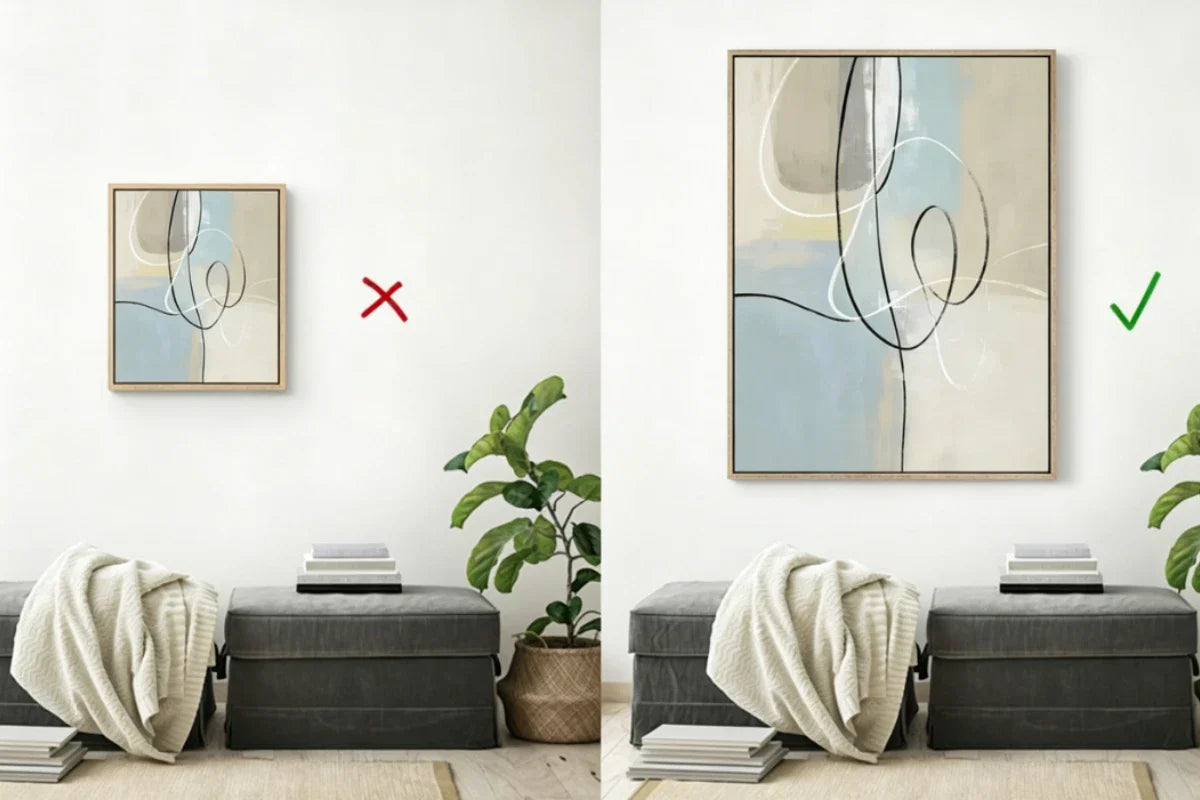
If the painting is less than 60% of the wall width, it can look like it’s “floating” on the wall with no real presence. If it’s more than 75%, it can create a sense of pressure and make the space feel crowded.
A lot of people, especially when buying their first piece, instinctively go smaller—and the result is that the wall ends up looking even more empty.
Rule 2: Consider furniture proportions
If you’re choosing between two sizes, go with the larger one—you usually won’t go wrong.
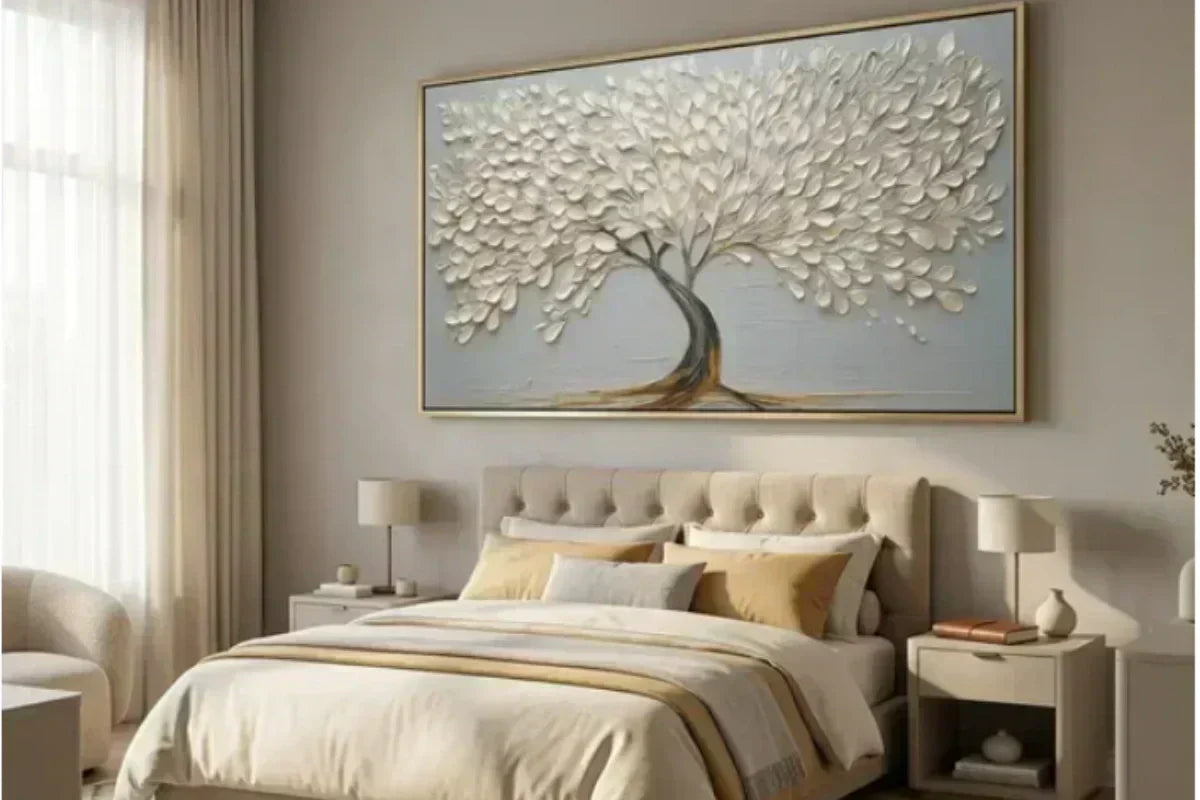
Also, don’t let the painting feel disconnected from the space. If your oil painting is going above furniture (like a sofa, bed, or dining table), you shouldn’t just look at the wall—you need to consider the furniture too.
A simple reference point:
The width of the painting should be about 2/3 to 3/4 of the furniture width. This usually results in a layout where the painting sits centered on the wall, surrounded by a balanced amount of space and furniture, which helps the whole setup feel more cohesive.
For example:
If your sofa is 210 cm wide, choose a painting around 140–160 cm wide.
If your bed is 180 cm wide, choose a painting around 120–135 cm wide.
Why does this matter?
Because when the painting is too small, it creates a strange feeling—the art and the furniture look like they belong to two separate setups instead of one unified design. The right proportion makes the space feel more put together.
Rule 3: Horizontal or vertical? Direction matters
A lot of people focus only on size and overlook direction, but it matters just as much.
Imagine a tall vertical wall in a bedroom, and you place a vertical painting that fills the space from top to bottom. This ignores the side space and stretches the room visually upward while making it feel narrower, which can make the bedroom feel more cramped.
There’s a simple way to decide:
- Horizontal paintings work better above sofas, beds, and long walls. They help visually widen the space.
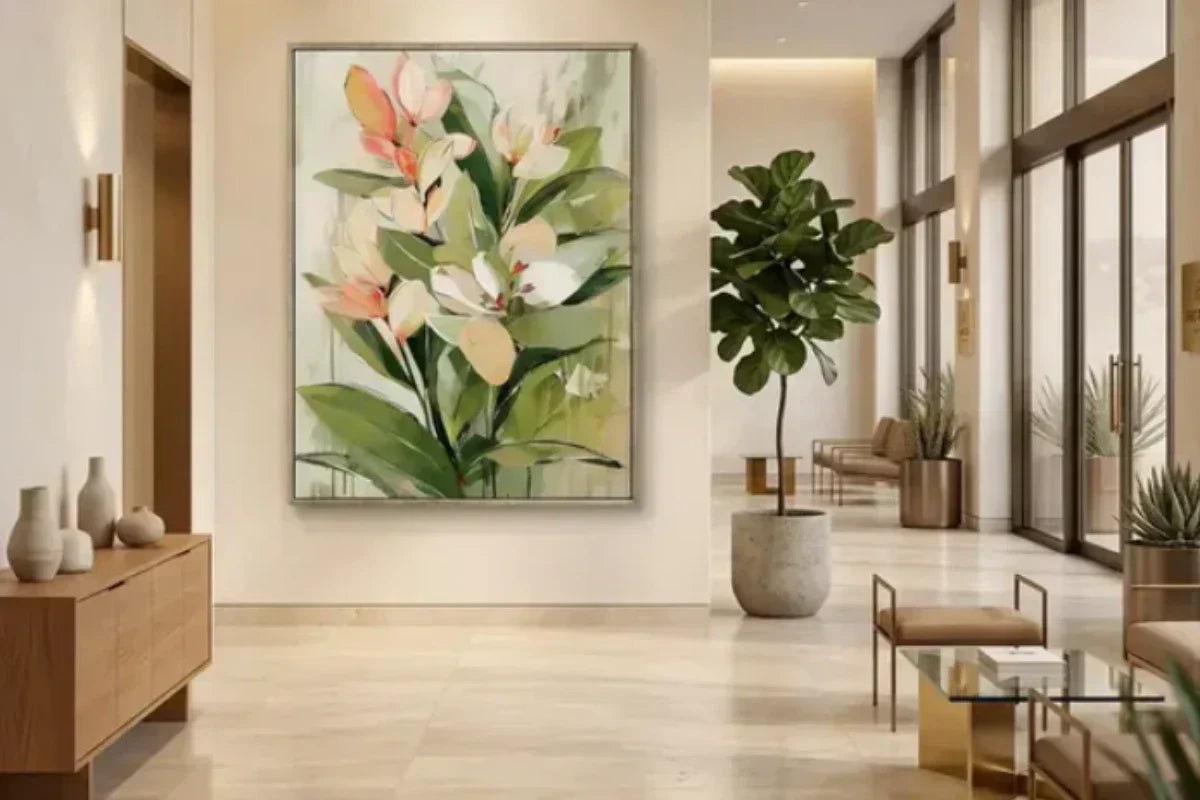
- Vertical paintings are better for hallways, narrow walls, and corners. They help visually add height.
If you hang a vertical painting above a long sofa, even if the size is correct, it will still feel off.
At the end of the day, the direction of the painting should follow the direction of the space.
Small, medium, or large: how do you choose?
If you’re not sure what size to go with, here’s a quick way to think about it:
- Small sizes are better for accents. They usually work best in groups (like a gallery wall), and a single small piece can feel underwhelming. If you’re using small pieces, add more than one.
- Medium sizes are the safest choice. They work in most homes and are less likely to look wrong.
- Large or oversized pieces are great as focal points. They work especially well in living rooms or on large blank walls and can quickly elevate the space.
A practical takeaway: most people choose art that’s too small, not too large. So for your first oil painting, it’s usually better to go bigger.

Common hanging mistakes you might have made
Sometimes the issue isn’t the size—it’s how the painting is hung.
- Hanging it too high
A lot of people place art too high on the wall, which throws off the visual balance.
Suggestion: the center of the painting should be about 145–150 cm (around 57 inches) from the floor. - Too far from the furniture
For example, if a painting above a sofa is too far away, it feels disconnected.
Suggestion: keep the bottom of the painting about 15–25 cm from the sofa. - Uneven spacing in gallery walls
If you’re arranging multiple pieces and the spacing is inconsistent or misaligned, the whole wall can look messy. Try to keep spacing consistent—it matters more than the content.
A simple tip: test it before you commit
If you’re not sure about the size, don’t rush to buy. Try a quick test first.
Use tape to outline the size of the painting on your wall, or use paper to mock up the proportions. Then take a photo and see how it looks.
This way, you can get a sense of how the painting will look in your space without actually having it in your home. It’s a simple method, but very effective—it can help you avoid most sizing mistakes.
Choosing the right size matters more than choosing the style
A lot of people spend time picking styles, colors, and subjects, but overlook the most important factor: size.
In reality, when the size is right, even a simple piece can look great. When the size is wrong, even an expensive painting can lose its impact.
If you don’t know where to start, just remember the three rules above.
With those in mind, you’ll be able to choose a size that works without much trouble.