How to Create a Cozy and Serene Wabi-Sabi Bedroom
When people decorate their bedrooms, they often end up making the same mistake without realizing it. They start ordering things they like online, and little by little the room gets filled with decorations. It might look nicer at first, but somehow the space doesn’t feel as easy to relax in anymore. In today’s fast-paced life, a bedroom that feels calm and simple matters more than one that looks perfect.
Social media bedrooms always look so put together, almost like model homes. People like looking at them, but living in them is a different story.
Most of the time, a truly comfortable bedroom just feels normal and lived-in. That’s partly why “cozy wabi-sabi bedrooms” have been getting more attention in the U.S. lately.
Why More and More People Are Falling in Love with Wabi-Sabi Bedrooms
Wabi-Sabi is not widely known as a design style. In many cases, a calm and relaxing bedroom already reflects parts of it. Wabi-Sabi is a Japanese aesthetic. The focus is on accepting things as they are, following nature, and letting go of perfection. For example, keeping the natural rust on iron window frames, the chipped edge of a ceramic piece, or the textured brushstrokes of a hand-painted oil painting.
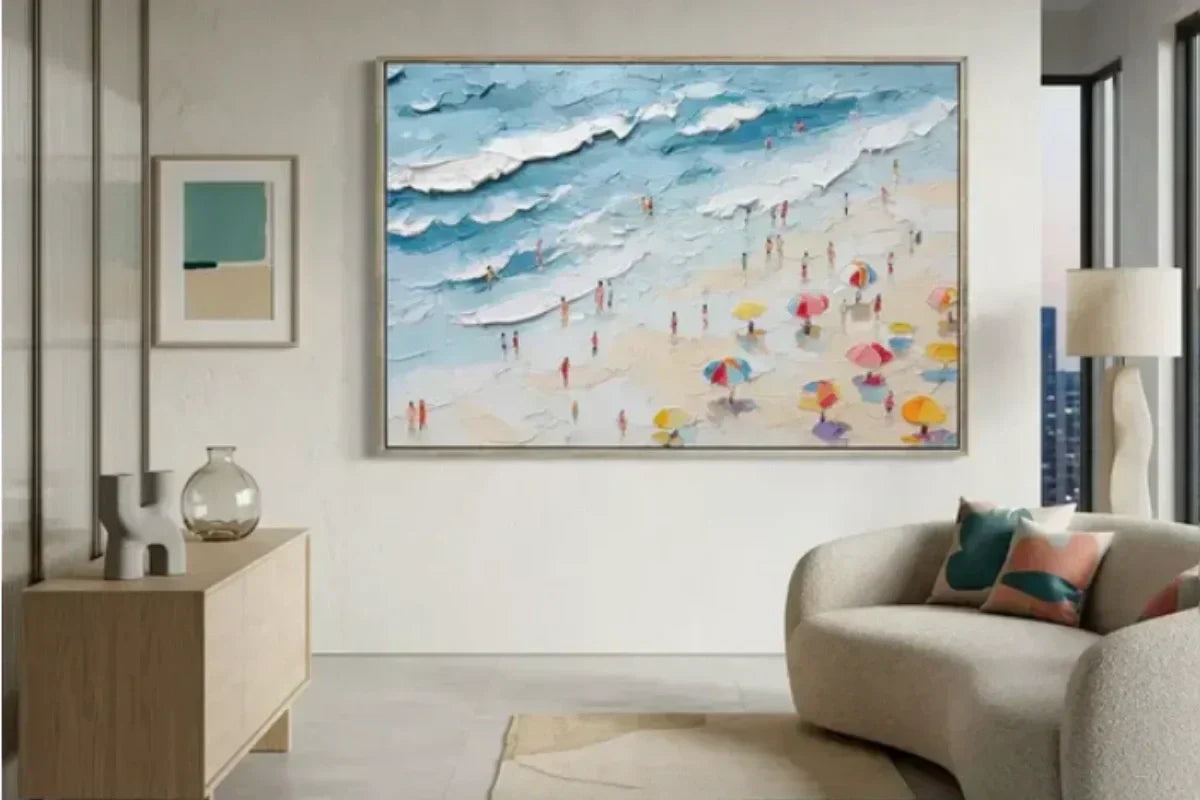
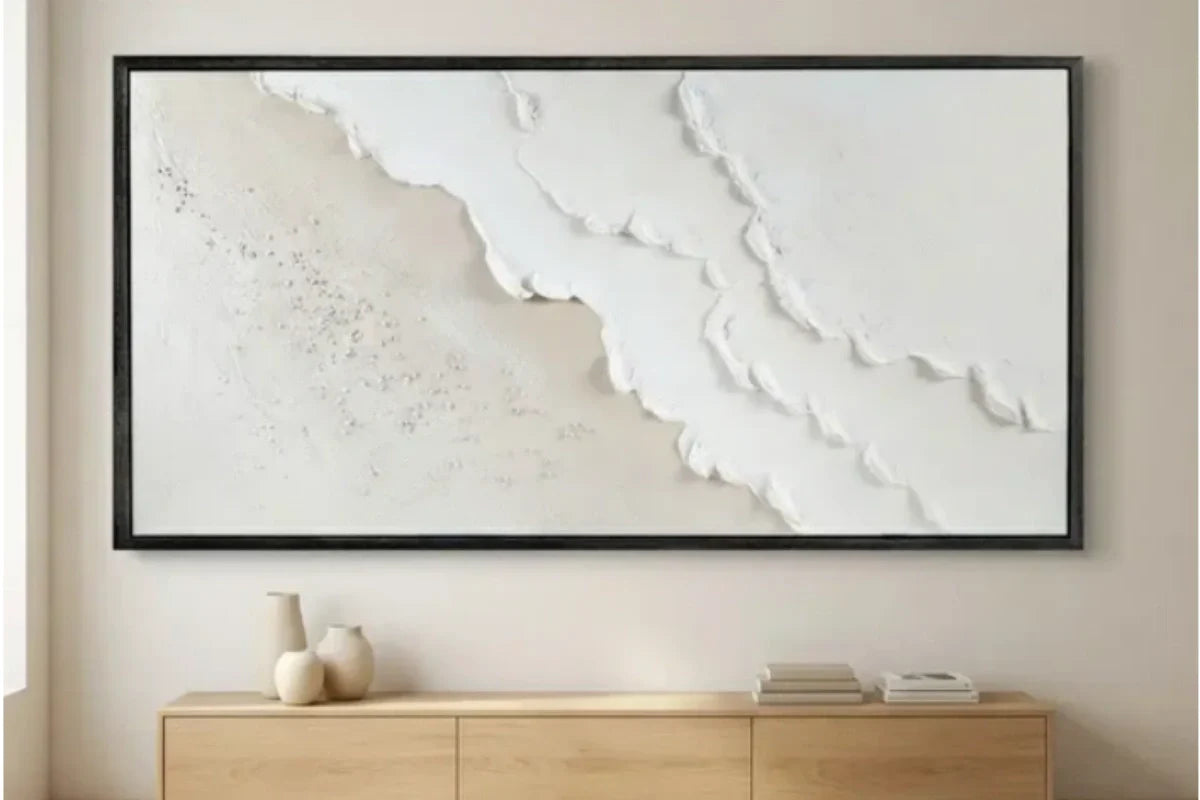
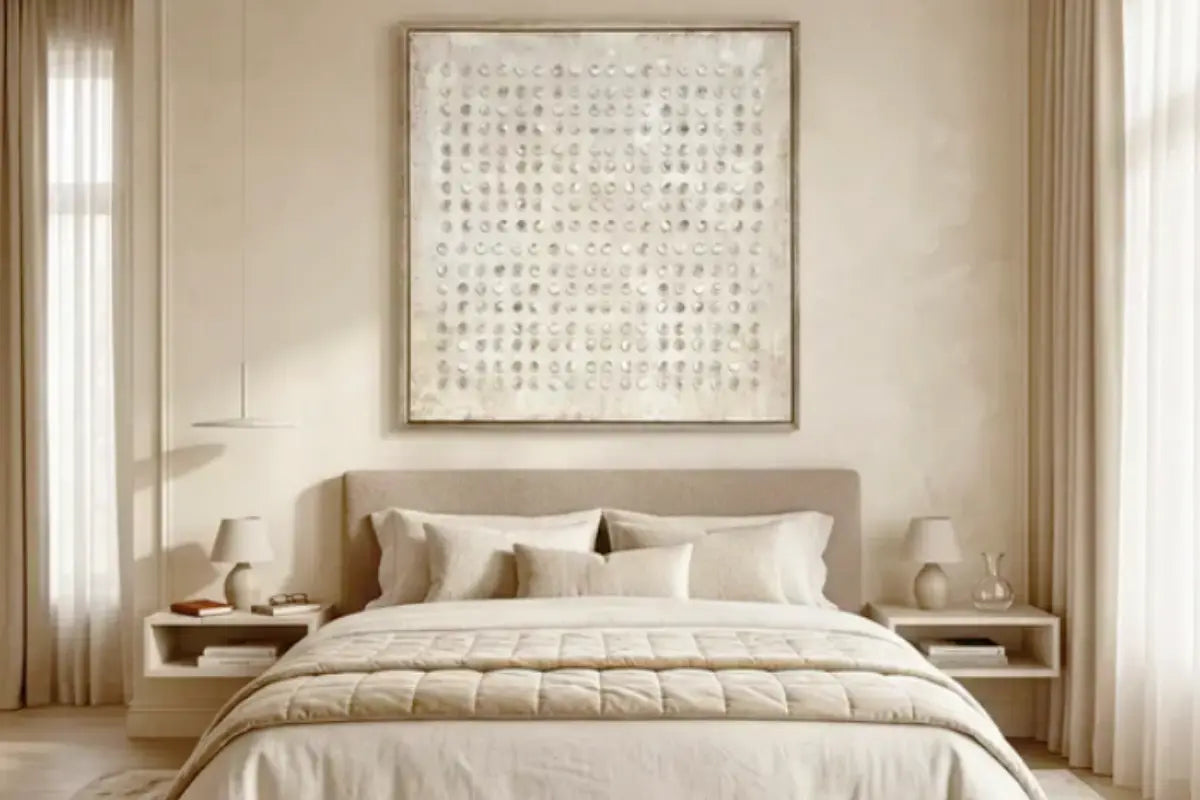
In a Wabi-Sabi bedroom, this style shows up pretty clearly. Many of these spaces lean toward natural, raw materials like unfinished wood, handmade ceramics, and hand-painted oil art, just like the ones shown here. The whole room also avoids artificial lighting, letting soft natural light come in through large floor-to-ceiling windows. A single earthy-toned painting often adds natural artistic character to the space.

Slow Living has become increasingly popular. Fast-paced lifestyles are being replaced with a focus on emotional comfort at home. Wabi-Sabi aligns naturally with this shift. It’s hard to resist a bedroom design like this.
How to Create a Wabi-Sabi Bedroom
Creating a Wabi-Sabi bedroom is relatively simple. A minimalist version or a cozy version follows similar ideas. A few basic decorating principles help guide the process.
1. Use Soft, Natural Tones
Color plays a key role in setting the mood of a bedroom. Warm beige, off-white, light taupe, linen shades, and soft gray tones all help create a calm atmosphere. Earth tones close to nature work especially well. Sunlight on an earth-toned wall creates a warm glow that feels soft and grounding. A natural color palette serves as the starting point for the design.

2. Choose Materials with Natural Texture
Natural materials bring depth and character into a space. Wood with visible grain, handmade ceramics, and linen fabrics support a Wabi-Sabi feel. These materials feel less processed and more organic.
Cotton and linen blends work well for soft furnishings. In spaces that feel too empty, rough pottery or hand-painted oil paintings add visual warmth. Textured surfaces help create a more grounded atmosphere.

3. Add a Hand-Painted Oil Painting as a Focal Point
A large hand-painted oil painting becomes one of the simplest ways to build a Wabi-Sabi atmosphere. Large wall areas feel more balanced when filled with textured artwork.
Brushstrokes with visible texture support the idea of natural imperfection, which is central to Wabi-Sabi design.
Different styles work for different spaces:
Cream-colored or warm gray Wabi-Sabi oil paintings work well in warm-toned spaces. Color blocks that echo the tones of nearby furniture help keep the room feeling balanced and cohesive.

A dark-toned bedroom is a great match for an abstract Wabi-Sabi oil painting. Bold abstract artwork helps break up the heavy atmosphere that darker color palettes can create.

For minimalist interiors, a line-focused Wabi-Sabi Wall Art #JLS007 works especially. Clean lines complement organized spaces and make the room feel even more open and uncluttered.

Rustic or bohemian interiors pair naturally with heavily textured oil paintings. Thick brushstrokes and layered texture blend easily into the space, while earthy tones help the artwork feel connected to the room itself.

4. Create Soft Lighting Layers
Wabi-Sabi bedroom design places strong emphasis on lighting and atmosphere. Warm-toned light sources and soft ambient lighting are preferred, often paired with a floor lamp by the bedside to create a relaxed, laid-back feel. Natural daylight is also kept whenever possible.
Harsh cool white lighting should be avoided, as bright, clinical light can disrupt the calm and understated mood that defines the Wabi-Sabi aesthetic.
5. Let the Space Feel Lived-In
Wabi-Sabi design accepts natural imperfection. Slightly unmade bedding, an open book on a nightstand, or natural aging on wooden furniture all contribute to a relaxed atmosphere.
There is no need to maintain perfect order at all times. Small signs of daily life make the space feel more authentic and comfortable.
Closing
The most comfortable bedroom is not defined by cost or perfection. A relaxed space allows imperfection to exist naturally. The essence of Wabi-Sabi is not decoration itself, but the feeling it creates.
Huemaster offers hand-painted oil paintings in various sizes designed to support this aesthetic and bring depth to interior spaces.