How to Decorate a Living Room: Expert Tips & Inspiring Ideas
Decorating a living room is one of those home projects that looks simple at first, but quickly becomes surprisingly complex once you start making real decisions. You might begin with a sofa in mind, then suddenly realize you’re also thinking about layout, lighting, wall color, and what kind of artwork should actually go on the wall.
A well-decorated living room is not just about filling space with furniture. It’s about creating a room that feels comfortable, functional, and visually connected. And in most cases, the element that quietly brings everything together is wall art—especially handmade oil paintings that add depth, texture, and a sense of personality.
This guide walks through how to decorate a living room in a practical, real-world way, with a strong focus on how to choose the right handmade oil painting so your space feels complete rather than unfinished.
Why Living Room Decoration Is About Balance, Not Perfection
A beautiful living room is rarely about perfect symmetry or matching every detail. Instead, it’s about balance—making sure the room feels natural, comfortable, and easy to live in.
When a space feels off, it’s usually not because of one bad piece of furniture, but because the overall composition doesn’t feel cohesive. A great sofa, stylish rug, and modern lighting can still feel disconnected if there is no visual anchor tying everything together.
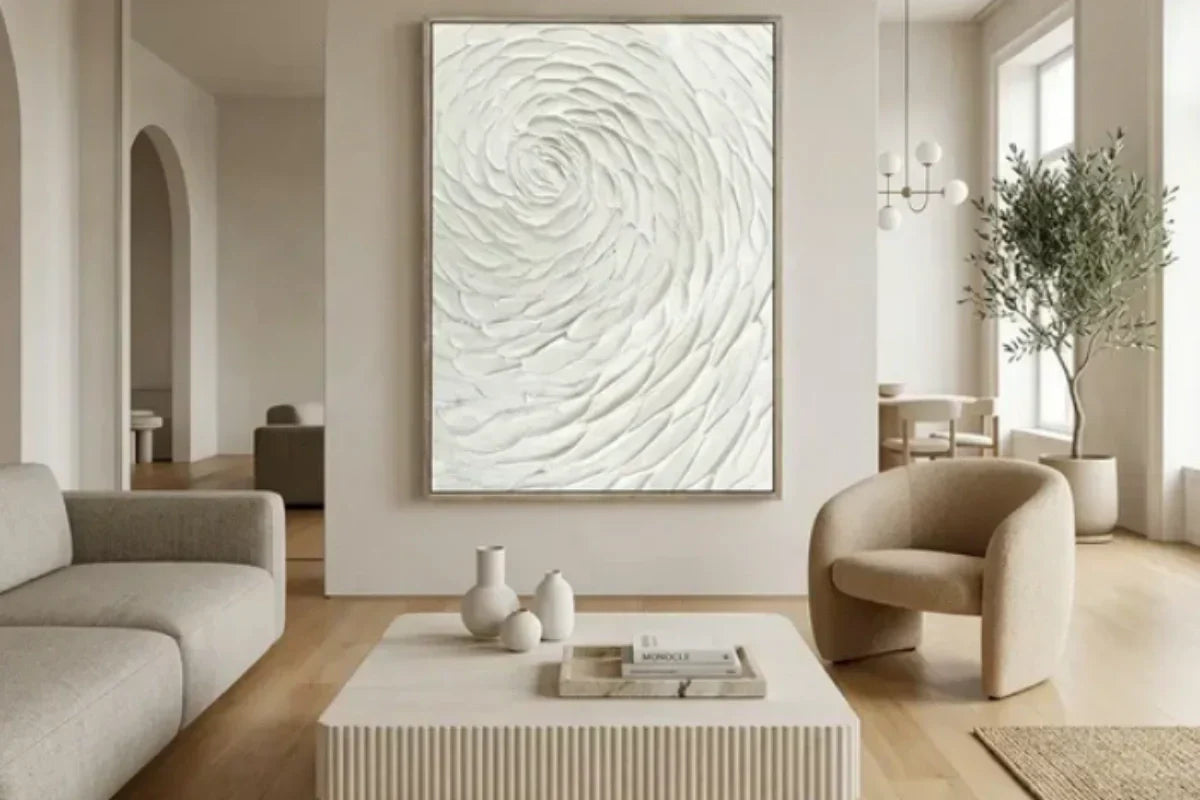
That’s why interior designers often emphasize the importance of focal points. Without one, the eye has nowhere to rest, and the room can feel visually scattered even if every item is high quality. In many modern interiors, a textured handmade oil painting—especially in a wabi sabi style—can quietly serve as that anchor without feeling overly styled.

Step 1: Plan Your Layout and Furniture Like a Designer
A successful living room always starts with layout before decoration. The way furniture is arranged determines how the space feels and how people naturally interact within it.
The first step is to identify the main activity of the room. Some living rooms are designed for conversation, others for relaxation or entertainment. Once that purpose is clear, furniture placement becomes much easier to decide.
Start with the largest piece, usually the sofa, and build the rest of the seating arrangement around it. Chairs, coffee tables, and side tables should support interaction and flow rather than block movement.
In smaller spaces, keeping furniture minimal and well-scaled prevents the room from feeling cramped. In larger spaces, grouping furniture into smaller zones helps create intimacy and structure instead of leaving everything spread out along the walls.
A well-planned layout is what makes a living room feel intentional rather than randomly arranged.
Step 2: Choose a Cohesive Color Scheme That Feels Natural
Color plays a powerful role in shaping the atmosphere of a living room. The right palette can make a space feel warm, calm, energetic, or modern without changing any furniture at all.
Most successful living rooms start with a neutral base such as soft beige, warm gray, or off-white. These tones create a stable background that allows other elements in the room to stand out without feeling overwhelming.
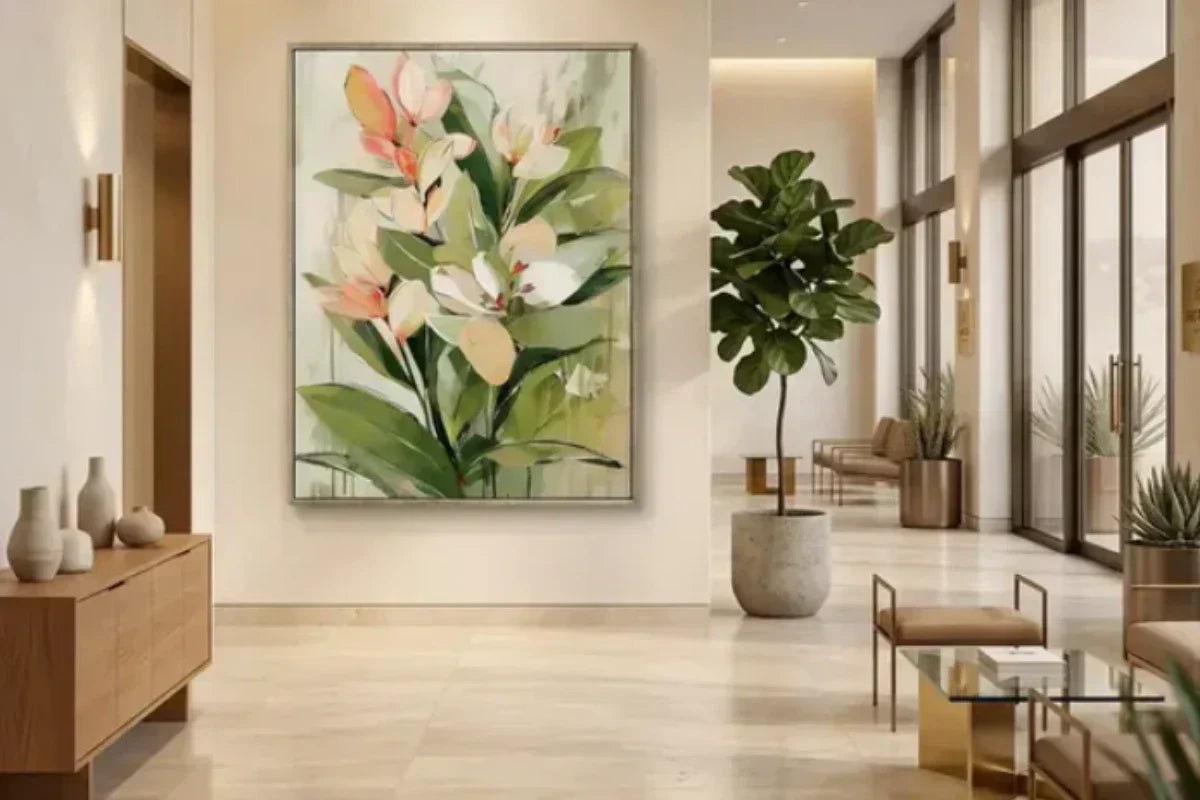
From there, secondary and accent colors are introduced gradually. Earth tones like terracotta, olive green, and muted brown often work well because they feel grounded and timeless.
A helpful way to think about color balance is to let neutrals dominate the space while accents appear in smaller, intentional details such as cushions, decor pieces, or artwork.
This is also where wabi sabi wall art naturally fits in. With its muted tones, organic textures, and imperfect brushwork, it blends seamlessly into neutral palettes while still adding quiet visual interest.

Step 3: Layer Textures to Make the Room Feel Warm and Lived-In
Texture is what transforms a flat, basic room into a warm and inviting living space. Without texture, even expensive furniture can feel cold or unfinished.
Layering texture means combining different materials in a thoughtful way. Soft textiles like throw blankets and pillows can be paired with natural materials such as wood, stone, or woven fabrics to create depth.
Rugs play an important role by grounding the seating area and adding softness underfoot. Curtains, especially in linen or cotton, help soften hard architectural lines and bring a relaxed feel to the room.
Handmade oil paintings also contribute to texture in a unique way. Unlike flat prints, oil paintings have visible brushwork and surface variation that interact with light throughout the day. This subtle texture makes the wall feel more dynamic and visually interesting. Wabi sabi paintings, in particular, emphasize raw textures and natural imperfections, which pair beautifully with materials like wood, linen, and stone.

Step 4: Lighting Sets the Emotional Tone of the Space
Lighting is one of the most underestimated parts of interior design. A well-lit living room does not rely on a single overhead fixture but instead uses multiple layers of light.
Ambient lighting provides overall brightness, while task lighting supports specific activities like reading. Accent lighting adds depth and highlights key areas such as artwork or architectural features.
Warm lighting tends to create a cozy, relaxing atmosphere, while cooler lighting feels more modern and clean. The best living rooms usually combine both in a controlled way to allow flexibility depending on time of day and mood.
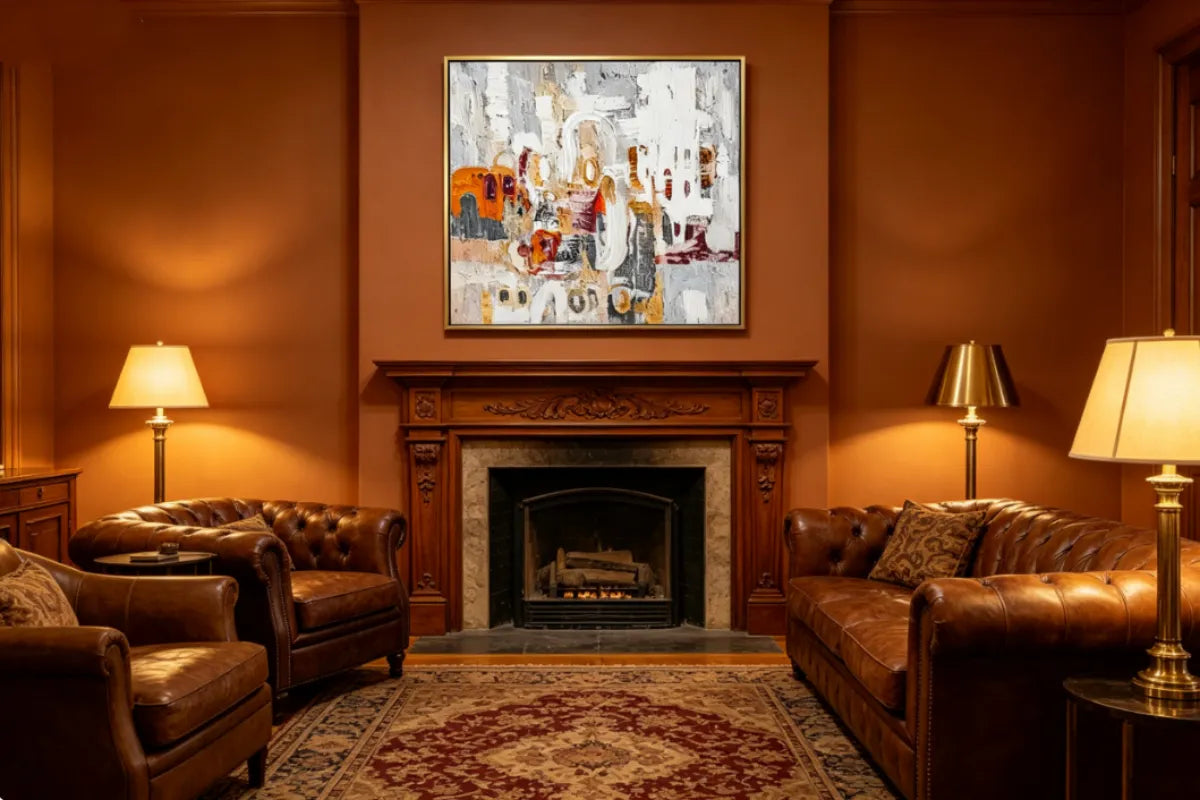
Lighting also directly affects how handmade oil paintings are perceived. The same painting can feel soft and subtle in daylight but rich and dimensional under warm evening light, especially when the artwork features textured, wabi sabi-style surfaces.
Step 5: Create a Focal Point That Grounds the Entire Room
Every living room benefits from having a clear focal point that immediately draws attention when you enter the space. Without it, the room can feel visually unstructured.
Common focal points include fireplaces, large windows, media walls, or statement furniture pieces. However, one of the most effective and flexible focal points is wall art.
A well-chosen painting can instantly define the mood of a room and help unify all other design elements. It gives the eye a natural place to rest and creates a sense of intention within the space.
Handmade oil paintings are especially effective because they carry both visual weight and emotional presence. A large wabi sabi wall art piece above the sofa, for example, can create a calm, grounded focal point without overwhelming the room.

Step 6: How to Choose the Right Handmade Oil Painting for Your Living Room
Choosing wall art is often the most personal part of decorating a living room, and it is also where many people feel unsure.
The first and most important step is to focus on emotion rather than matching colors. A painting should feel right before it looks right. If a piece creates a sense of calm, warmth, or quiet balance, that emotional response is usually a good sign.
This is one reason why wabi sabi wall art has become increasingly popular in modern homes. Its understated, imperfect aesthetic naturally creates a sense of calm without feeling overly designed.
Scale is equally important. A painting that is too small can disappear on a large wall, while a properly sized piece can instantly define the entire room. In most living rooms, larger artwork above the sofa works better than multiple small frames scattered across the wall.
Texture is another key factor. Handmade oil paintings are valued not only for their imagery but also for their physical surface. Visible brushstrokes and layered paint create depth that changes depending on lighting and viewing angle.
It is also worth considering longevity. Neutral or abstract oil paintings—especially those inspired by wabi sabi principles—tend to age better visually because they are not tied to specific trends.
Finally, the best approach is to let the artwork guide the room rather than forcing it to match every existing element. A strong yet subtle piece can introduce warmth and elevate the entire space effortlessly.
Step 7: Decorating Large vs Small Living Rooms
Large living rooms require careful attention to scale and proportion. Without enough visual weight, the space can feel empty or disconnected. Oversized artwork, large rugs, and grouped seating arrangements help create structure and balance.
In spacious rooms, dividing the space into functional zones such as conversation areas or reading corners makes the environment feel more intimate and usable. A large wabi sabi oil painting can also help soften expansive walls and make the room feel more grounded.
Small living rooms, on the other hand, benefit from simplicity and restraint. Lighter colors, fewer decorative elements, and well-chosen multifunctional furniture help maintain openness.
In smaller spaces, a single strong focal painting often works better than multiple decorative pieces. A minimal wabi sabi artwork with soft tones can add interest without overwhelming the space.
A Living Room Should Feel Lived-In, Not Styled
A well-designed living room is not just visually appealing—it is comfortable, functional, and reflective of the people who live in it.
Furniture provides structure, lighting shapes mood, and textures add comfort. But handmade oil paintings bring something deeper: personality and emotional presence.
When chosen thoughtfully, a painting does more than decorate a wall. It quietly ties the entire room together, making the space feel complete, balanced, and genuinely lived-in rather than staged.
If you're looking for pieces that blend naturally into modern interiors, you can explore to find textured, handcrafted artworks that bring a calm and timeless feel to your living room.