Why Wabi-Sabi Homes Feel So Comforting to So Many People
As more people start looking for a slower, more relaxed lifestyle, Wabi-Sabi has gradually become one of the easiest home aesthetics for people to embrace. This Japanese philosophy is actually built around a very simple idea: accepting impermanence, accepting imperfection, and rediscovering beauty within those imperfections.
Wabi-Sabi interiors are not just another “home design style.” They feel more like an emotional release. While modern society constantly pushes efficiency, perfection, discipline, and polished aesthetics, Wabi-Sabi quietly tells us the opposite: cracks, worn textures, and signs of age are all worth keeping.
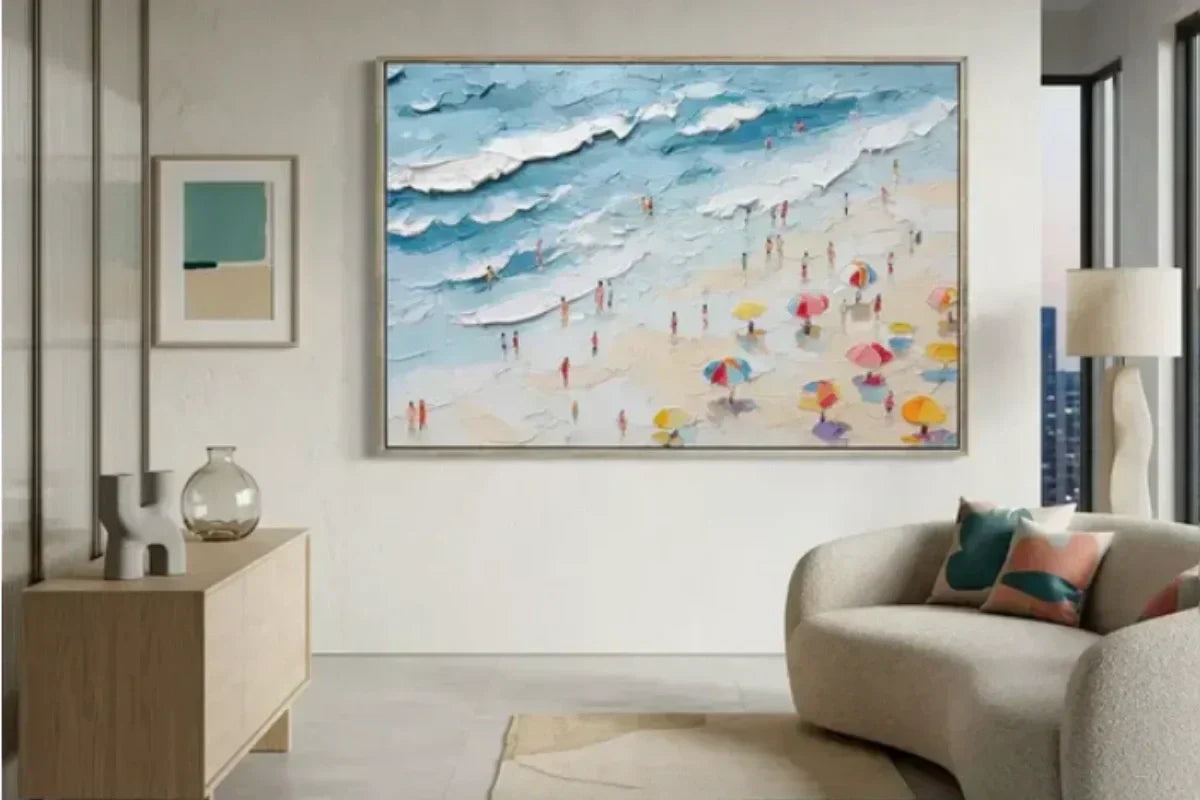
For example, a wooden table with naturally uneven grain patterns, a ceramic mug with a slightly chipped edge, or a handmade oil painting filled with rough brush textures on the wall. These details may seem “imperfect,” but the sense of authenticity they bring actually makes people feel more relaxed.
For many people, the first time they truly fall in love with Wabi-Sabi is not because it feels luxurious or trendy, but because of the calm and comfort it naturally creates.
Wabi-Sabi Can Reduce Perfectionism and Anxiety
One reason Wabi-Sabi interiors feel so comforting is because they do not create pressure to be “perfect.”
You do not need to keep your home looking like a showroom every single day, and you do not need to replace furniture immediately just because of a small flaw. In fact, the marks left behind from years of use are considered part of life itself.
This mindset can genuinely help ease modern perfectionism and anxiety. Once you begin accepting the idea that “imperfection can still be beautiful,” a lot of that mental tension slowly starts to loosen.
Wabi-Sabi Helps Build Emotional Resilience
When many people first hear about Wabi-Sabi, they mistakenly think it is some kind of “giving up” philosophy. But in reality, Wabi-Sabi is not about giving up at all — it is about learning how to accept things more gently.
It acknowledges that life changes, people age, regrets happen, and loss is unavoidable. But those experiences do not reduce the value of things. Instead, they often give life deeper meaning. In many ways, this idea feels very close to the modern psychological concept of emotional acceptance.
In recent years, many studies have pointed out that people who are able to accept negative emotions instead of constantly suppressing them usually have more stable emotional health. Wabi-Sabi works in a very similar way. It does not demand that you stay positive or optimistic all the time. Instead, it allows space for exhaustion, vulnerability, and the changes left behind by time.
Wabi-Sabi Is Not the Same as Perfection
Wabi-Sabi believes that beauty is often hidden in the places shaped by time.
For example, the naturally aged color of old wood, tiny cracks on handmade pottery, the softened texture of worn fabric edges, or the thick brushstrokes and paint texture preserved in handmade oil paintings.
These things may not look “perfect” or standardized, but they carry a sense of authenticity that machines can never fully recreate. Especially now, when mass-produced home decor is starting to look increasingly similar, people are beginning to miss objects that still carry visible traces of handcraftsmanship.
How to Bring Wabi-Sabi Art Into Your Home
Hang Wabi-Sabi Oil Paintings on Empty Walls
Many Wabi-Sabi-inspired spaces choose oversized handmade oil paintings as the visual centerpiece of the room.
Compared to printed wall art, real handmade oil paintings preserve visible paint layers, textured brushstrokes, and natural irregularities in the details. Ironically, this natural imperfection is exactly what makes them fit Wabi-Sabi aesthetics so well.
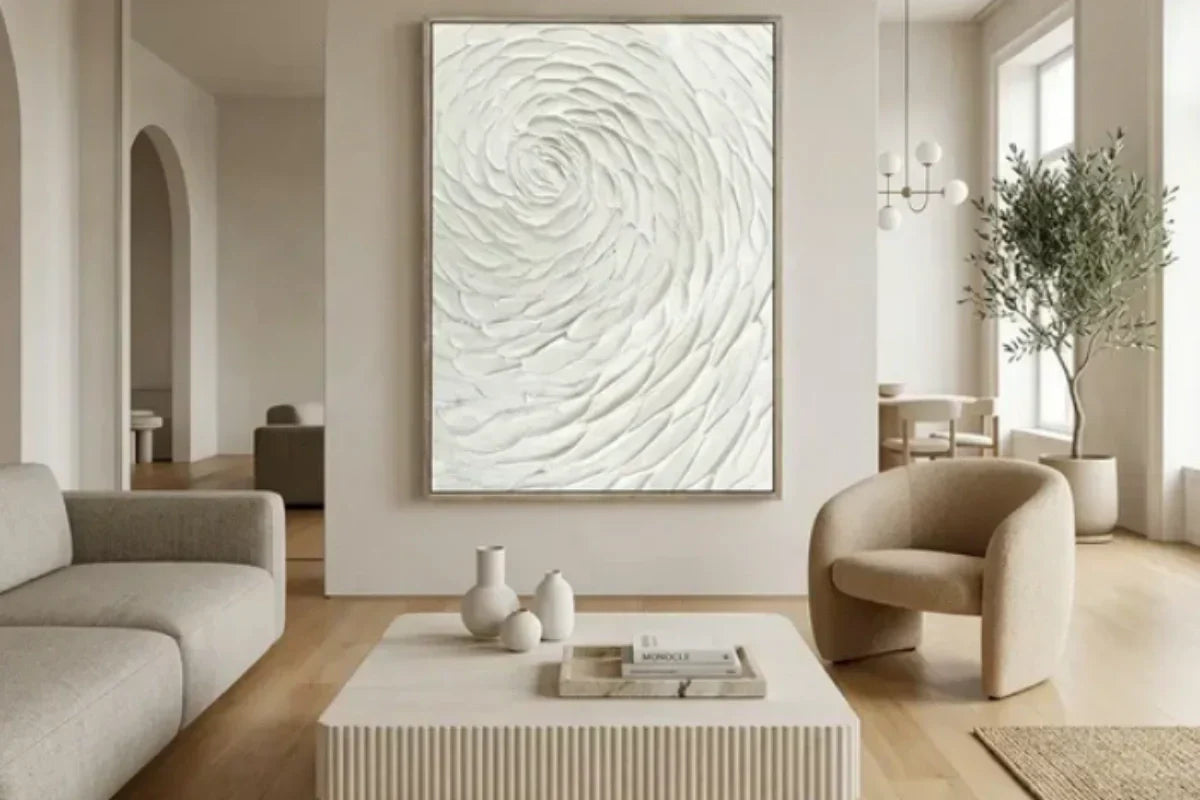
Especially in cream-style interiors, natural wood homes, or minimalist spaces, a Wabi-Sabi painting with soft neutral tones and intentional negative space can instantly make a room feel calmer.
For example, choosing artwork built around gray and white tones can help balance the atmosphere of a space. Wabi-Sabi Wall Art #JLS009 mainly uses off-white, light beige, and warm gray tones. There are no bright or overly saturated colors anywhere in the painting. Instead, the entire piece feels soft and muted, almost like a faded object shaped by time, instantly calming down the visual noise in a room and creating a peaceful, relaxed atmosphere.

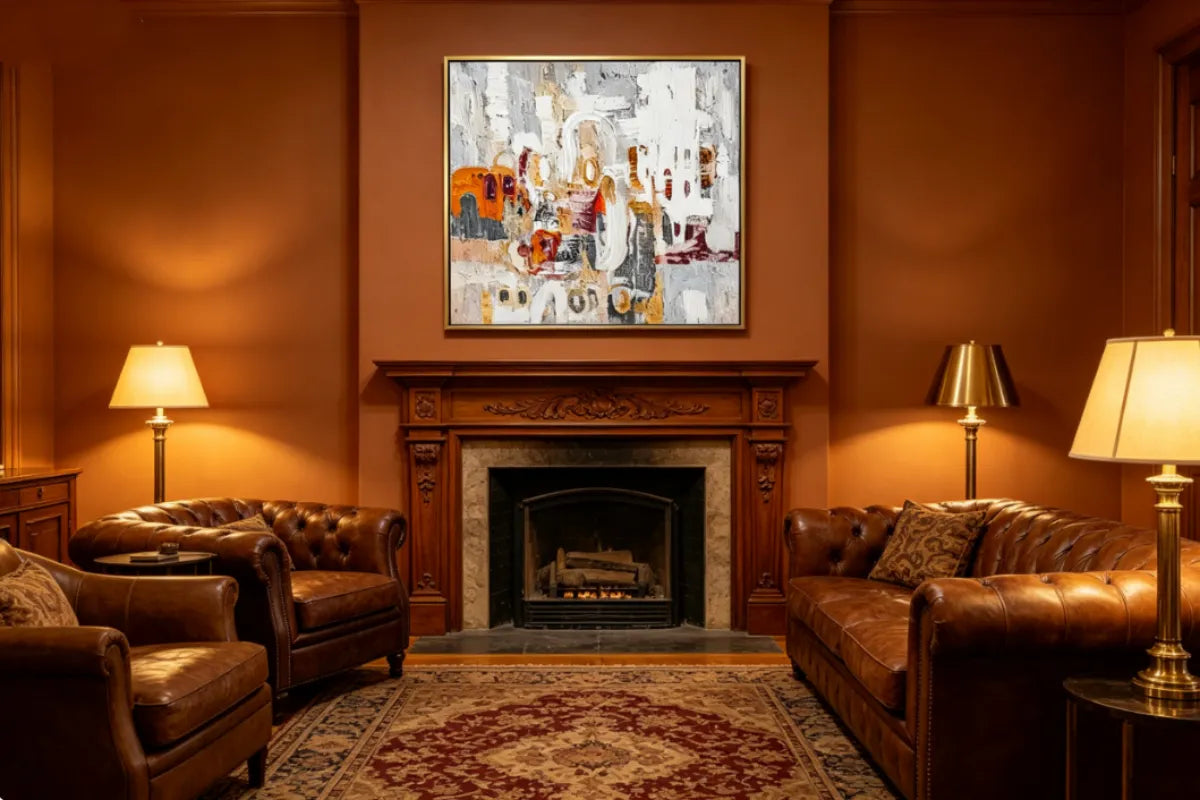
If you want to add more texture and depth to the room, choosing a darker Wabi-Sabi oil painting can work beautifully as well. For example, Gilded Grid Forms Wabi Sabi Wall Art uses touches of gold to bring warmth and subtle visual highlights into a more rustic space. And if your room leans heavily toward natural wood decor, the black elements inside the artwork can perfectly balance out the heaviness of wood furniture and deeper tones.

Most importantly, every fully handmade oil painting carries a raised, textured surface created through hand-painted techniques. Different line styles — straight lines, waves, and curves — create changing shadows and highlights depending on the lighting throughout the day, helping the wall feel more dynamic instead of flat or repetitive.
Compared to overly complicated wall decor, Wabi-Sabi spaces focus much more on the idea of “less, but with texture and depth.”
Learning to Appreciate Small Imperfections in Wabi-Sabi Art and Home Decor
One of the most beautiful things about Wabi-Sabi is that it teaches people to appreciate irregularity again.
Machine-printed artwork may look flawless and standardized, but the varying thickness of paint, slight imperfections in details, and textured edges found in handmade oil paintings are what truly make each piece one of a kind.
These small details that cannot be perfectly duplicated are often the most valuable part of handmade art. The same idea applies to home interiors as well.
A home that genuinely feels lived in usually does not look completely untouched like a furniture showroom. Wrinkles on the sofa, texture marks left on a wooden table after years of use, and subtle color shifts caused by sunlight all make a space feel warmer and more timeless.
Simplifying the Visual Noise Inside a Room
A lot of modern anxiety actually comes from visual overload.
Too many decorations, overly complicated color palettes, and cluttered layouts can make a room feel emotionally heavy. Wabi-Sabi, on the other hand, focuses much more on negative space and simplicity.
That does not mean your home should feel empty. Instead, it encourages keeping objects that truly feel meaningful and capable of staying with you for years.
Rather than constantly buying trendy new decorations, Wabi-Sabi leans toward holding onto items that remain beautiful over time. Especially a handmade oil painting that you can continue appreciating for years often feels far more valuable than large amounts of short-term trendy decor.
Creating a Quiet and Peaceful Space
More and more people are beginning to realize that the emotional atmosphere of a space directly affects how they feel mentally and emotionally.
A quiet, non-overstimulating environment that allows people to slow down is becoming increasingly important. And Wabi-Sabi interiors happen to provide exactly that kind of emotional comfort.
Soft colors, natural materials, intentional empty space, and handmade artistic decor all help create a calmer, steadier feeling within a home.
And honestly, that may be exactly why more and more people are falling in love with Wabi-Sabi interiors today.